






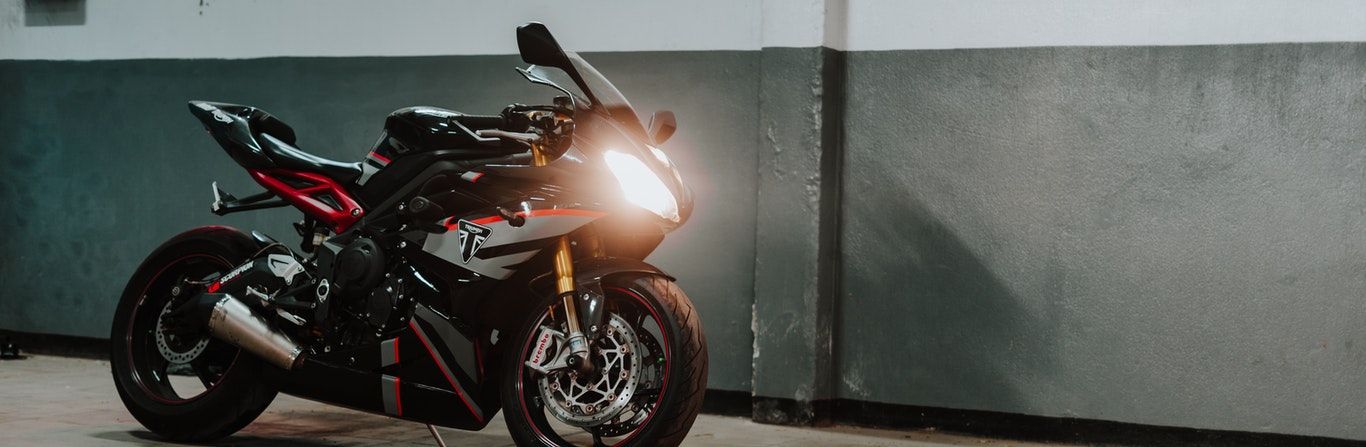
The fastest bike in the world: The ultimate speed machine
The Kawasaki Ninja H2R is widely recognised as the fastest production motorcycle in the world, with a verified top speed of approximately 400 km/h under controlled track conditions. However, it is a track-only motorcycle and is not street legal. If the discussion includes concept motorcycles, the Dodge Tomahawk is often mentioned due to its claimed theoretical speed, but it was never commercially produced or independently tested at those speeds.
For most enthusiasts, the term "fastest bike in the world" refers to the fastest production motorcycle that has been manufactured and tested, rather than a concept or prototype.
When it comes to motorcycles, speed has always fascinated riders, engineers, and enthusiasts alike. Whether it is the roar of a high-performance engine, cutting-edge aerodynamics, or the thrill of pushing engineering limits, the fastest bike in the world represents the pinnacle of motorcycle innovation.
Modern superbikes are no longer judged only by engine displacement. Today's fastest machines combine lightweight construction, advanced electronics, aerodynamic winglets, sophisticated traction control systems, and immense power to achieve extraordinary performance.
In this guide, you'll discover the World's fastest bike top speed, explore the Top 10 fastest bikes in the world, understand the difference between production and concept motorcycles, compare their specifications, and learn which of these superbikes are actually available in India.
What makes a bike the fastest?
Before diving into the specific models, it's important to understand what makes a motorcycle exceptionally fast.
Top speed is determined by far more than engine size alone. Manufacturers invest heavily in engineering, aerodynamics, electronics, and lightweight materials to maximise performance while maintaining stability at extreme speeds.
Some of the biggest factors include:
- Engine capacity and power output: Larger, high-performance engines generate greater horsepower and torque.
- Power-to-weight ratio: A lighter motorcycle with higher power accelerates faster and reaches higher speeds.
- Aerodynamics: Streamlined fairings, aerodynamic winglets, and rider positioning reduce drag.
- Transmission and gearing: Optimised gear ratios ensure efficient power delivery at high speeds.
- Electronic rider aids: Modern superbikes use traction control, launch control, wheelie control, cornering ABS, and riding modes to maximise usable performance.
- Tyres and chassis design: High-speed stability depends heavily on specialised tyres, suspension geometry, and chassis rigidity.
These engineering elements work together to create motorcycles capable of reaching speeds once thought impossible.
Top speed and performance metrics
When discussing the top 10 fastest bikes in the world, enthusiasts often focus on top speed. However, manufacturers evaluate performance using several metrics.
Important measurements include:
Performance Metric | Why It Matters |
|---|---|
| Top speed | Maximum speed achievable under ideal conditions |
| Horsepower | Determines acceleration and high-speed capability |
| Torque | Influences low-end acceleration and overtaking ability |
| Power-to-weight ratio | Indicates how efficiently power moves the motorcycle |
| Aerodynamics | Reduces drag and improves high-speed stability |
| Electronics package | Helps riders safely utilise maximum performance |
While top speed captures headlines, real-world performance often depends just as much on acceleration, handling, braking, and rider confidence.
Top 10 fastest bikes in the world
When discussing the Top 10 fastest bikes in the world, it is important to distinguish between verified production motorcycles, track-only motorcycles, and concept vehicles. The ranking below prioritises motorcycles with manufacturer specifications or widely accepted verified performance figures.
1. Kawasaki Ninja H2R
Top speed: Approximately 400 km/h (verified under controlled conditions)
The Kawasaki Ninja H2R is widely recognised as the fastest production bike ever built. Powered by a 998 cc supercharged inline-four engine, it produces over 300 hp and delivers breathtaking acceleration.
Designed exclusively for closed-circuit racing, the H2R is not street legal. Its carbon-fibre aerodynamic winglets, lightweight trellis frame, and advanced electronics help it remain stable even at extremely high speeds.
Why it stands out
- Supercharged 998 cc engine
- Track-only motorcycle
- Carbon-fibre aerodynamic bodywork
- Advanced traction and launch control
2. MTT 420RR (Successor to the Y2K)
Top speed: Approximately 439 km/h (claimed)
The original article lists the 2000 MTT Y2K Superbike. While historically important, Marine Turbine Technologies has since introduced the MTT 420RR, which claims even higher performance using a Rolls-Royce Allison turbine engine.
The original MTT Y2K became famous for using a helicopter turbine engine and producing extraordinary power.
Why it stands out
- Rolls-Royce turbine engine
- Extremely limited production
- One of the world's most exclusive motorcycles
3. Lightning LS-218
Top speed: 350 km/h
The Lightning LS-218 continues to hold the distinction of being the world's fastest production electric motorcycle.
Powered entirely by electricity, it demonstrates that electric motorcycles can compete directly with high-performance petrol superbikes.
Highlights
- Electric powertrain
- Approximately 350 km/h top speed
- Zero tailpipe emissions
- Exceptional acceleration
4. BMW M 1000 RR
Top speed: Approximately 314 km/h
BMW's flagship superbike combines race-derived engineering with everyday usability.
Its 999 cc inline-four engine, aerodynamic winglets and sophisticated rider aids make it one of today's fastest superbikes.
Highlights
- 999 cc inline-four engine
- Advanced electronics
- Carbon fibre components
- MotoGP-inspired aerodynamics
5. Kawasaki Ninja H2
Top speed: Approximately 331–337 km/h
Unlike the H2R, the Kawasaki Ninja H2 is fully street legal. Although it shares the same supercharged heritage, its engine tuning and electronics are designed for road use rather than unrestricted track performance.
6. Ducati Superleggera V4
Top speed: Approximately 300–305 km/h
The Ducati Superleggera V4 is powered by a 998 cc Desmosedici Stradale R V4 engine, making it one of the lightest and most exclusive Ducati motorcycles ever built.
Its carbon-fibre frame, swingarm and wheels contribute to an exceptional power-to-weight ratio.
7. Aprilia RSV4 Factory
Top speed: Approximately 305 km/h
The RSV4 Factory combines race-winning pedigree with exceptional road manners.
The RSV4 has won multiple World Superbike Championship titles, making it one of the most successful production superbikes in racing history.
8. Ducati Panigale V4 R
Top speed: Approximately 299 km/h
The Panigale V4 R is Ducati's homologation superbike built for WorldSBK competition.
Its aerodynamic package, sophisticated electronics and race-derived chassis make it one of today's finest track motorcycles.
9. Suzuki Hayabusa GSX1300R
Top speed: Electronically limited to 299 km/h
The Hayabusa remains one of motorcycling's greatest legends.
Although it once held the title of the fastest production motorcycle, modern Hayabusa models follow the industry's voluntary 299 km/h speed limiter agreement introduced by major Japanese and European manufacturers.
10. Dodge Tomahawk (Concept Vehicle)
Claimed theoretical speed: 560–680 km/h (never independently verified)
Although the Dodge Tomahawk frequently appears in online rankings, it is not considered the fastest production bike.
Reasons include:
- It was primarily a concept vehicle.
- Its claimed speed has never been independently tested.
- It was never mass-produced as a conventional motorcycle.
- Its unique four-wheel design makes classification controversial.
For this reason, most motorcycle experts do not include it when ranking the fastest production motorcycles.
Fastest production motorcycle vs concept bike
One of the biggest misconceptions among motorcycle enthusiasts is that every bike with a claimed record-breaking speed is actually available for purchase. In reality, there is an important distinction between a production motorcycle and a concept motorcycle. Understanding this difference helps explain why some motorcycles dominate official speed rankings while others remain engineering showcases.
What is a production motorcycle?
A production motorcycle is manufactured in commercially available quantities and can generally be purchased by customers. It complies with regulatory and safety standards applicable in its intended markets, although some models, such as the Kawasaki Ninja H2R, are built exclusively for track use.
Examples include:
- Kawasaki Ninja H2R
- BMW M1000RR
- Ducati Panigale V4 R
- Suzuki Hayabusa
- Aprilia RSV4 Factory
What is a concept motorcycle?
A concept motorcycle is primarily built to demonstrate engineering innovation or showcase future technologies. These motorcycles are rarely mass-produced, may not undergo independent performance testing, and often do not meet road homologation requirements.
The Dodge Tomahawk is perhaps the best-known example. Although its claimed top speed frequently appears online, it has never been independently verified, making it inappropriate to compare directly with production motorcycles.
Top speed comparison of the world's fastest bikes
While top speed often dominates headlines, it tells only part of the story. Modern superbikes are engineered to deliver balanced performance, combining acceleration, handling, braking, and electronic rider assistance with outright speed.
Comparison of the world's fastest motorcycles
Motorcycle | Engine | Power (Approx.) | Top Speed | Street Legal |
|---|---|---|---|---|
| Kawasaki Ninja H2R | 998 cc Supercharged | 310 hp+ | ~400 km/h | No |
| MTT 420RR | Turbine | 420 hp | ~439 km/h (claimed) | Limited |
| Lightning LS-218 | Electric | 244 hp | ~350 km/h | Yes |
| Kawasaki Ninja H2 | 998 cc Supercharged | 228 hp | ~337 km/h | Yes |
| BMW M1000RR | 999 cc | 212 hp | ~314 km/h | Yes |
| Ducati Superleggera V4 | 998 cc V4 | 234 hp | ~300 km/h | Yes |
| Aprilia RSV4 Factory | 1099 cc V4 | 217 hp | ~305 km/h | Yes |
| Ducati Panigale V4 R | 998 cc V4 | 240 hp | ~299 km/h | Yes |
| Suzuki Hayabusa | 1340 cc | 190 hp | 299 km/h | Yes |
The table demonstrates that while the Kawasaki Ninja H2R remains the benchmark for outright speed, several street-legal motorcycles offer exceptional real-world performance with greater practicality.
Fastest bikes available in India
Not every motorcycle featured in global speed rankings is officially available in India. Import regulations, homologation requirements, and manufacturer strategies determine which models reach Indian showrooms.
Superbikes officially available in India
Motorcycle | Officially Available | Approximate Ex-showroom Price* |
|---|---|---|
| Suzuki Hayabusa | ✔ | ₹16–17 lakh |
| BMW M1000RR | ✔ | ₹49 lakh+ |
| Ducati Panigale V4 R | ✔ (limited allocation) | ₹70 lakh+ |
| Kawasaki Ninja H2 | ✔ | ₹80 lakh+ |
| Ducati Superleggera V4 | Extremely limited | By allocation |
*Prices vary depending on state taxes, import duties, and model year.
Although the Kawasaki Ninja H2R is sold in select markets, it is a track-only motorcycle and cannot be legally registered for road use in India.
What should buyers consider before choosing a superbike?
Owning one of the world's fastest motorcycles involves far more than chasing top speed. Buyers should evaluate several practical considerations before making a purchase.
1. Riding experience
High-performance motorcycles demand advanced riding skills. Many produce well over 200 horsepower, making them unsuitable for inexperienced riders.
2. Maintenance costs
Premium motorcycles require specialised servicing, performance tyres, and high-quality lubricants, resulting in significantly higher maintenance costs than standard motorcycles.
3. Availability of service centres
Prospective buyers should ensure authorised service centres and spare parts are readily available in their city before purchasing an imported superbike.
4. Insurance costs
High-value motorcycles typically attract higher insurance premiums due to their replacement costs and performance capabilities. Choosing appropriate coverage is therefore essential.
Readers interested in protecting premium motorcycles can also explore guides on bike insurance online, two-wheeler insurance online, and comprehensive bike insurance to understand the available coverage options for high-performance bikes.
How speed records are measured
Top-speed figures are not measured under everyday riding conditions. Manufacturers and independent testing organisations conduct these tests on closed tracks using professional riders, specialised equipment, and controlled environmental conditions.
Variables such as wind direction, tyre condition, rider weight, altitude, and track surface can all influence recorded speeds. For this reason, published top-speed figures should be viewed as controlled performance benchmarks rather than speeds achievable on public roads.
This distinction is particularly important when comparing production motorcycles with concept vehicles or prototype machines, whose claimed speeds may never have undergone independent verification.
Conclusion
The pursuit of speed has always driven motorcycle innovation, resulting in machines that continually redefine what is mechanically possible. From the track-only Kawasaki Ninja H2R to legendary road-legal motorcycles like the Suzuki Hayabusa and Ducati Panigale V4 R, today's superbikes represent decades of engineering excellence.
However, choosing the right motorcycle involves much more than comparing top-speed figures. Riding experience, maintenance requirements, availability of authorised service centres, ownership costs, and insurance coverage all play an equally important role in long-term satisfaction.
For enthusiasts researching the fastest bike in the world or comparing the Top 10 fastest bikes in the world, understanding the difference between production motorcycles, concept bikes, and track-only machines helps create a more accurate picture of modern superbike performance. Likewise, recognising the World's fastest bike top speed within its proper context ensures informed comparisons rather than relying on unverified internet claims.
Ultimately, while top speed remains an exciting benchmark, the true value of a high-performance motorcycle lies in how effectively it combines engineering, technology, safety, and everyday rideability.
Frequently asked questions
1. Which is the fastest bike in the world?
The Kawasaki Ninja H2R is widely recognised as the fastest production motorcycle in the world, with a verified top speed of approximately 400 km/h under controlled track conditions. Since it is designed exclusively for racing, it is not street legal.
2. What is the World's fastest bike top speed?
Among production motorcycles, the Kawasaki Ninja H2R has achieved a verified top speed of around 400 km/h. Some concept motorcycles, such as the Dodge Tomahawk, have much higher claimed speeds, but these figures have never been independently verified and should not be compared with production motorcycles.
3. Which is the fastest production bike currently available?
The Kawasaki Ninja H2R currently holds the title of the fastest production bike. It uses a supercharged 998 cc engine producing over 300 horsepower and is built exclusively for closed-circuit racing.
4. Which is the fastest superbike in the world that is street legal?
Among road-legal motorcycles, models such as the Kawasaki Ninja H2, Suzuki Hayabusa, BMW M1000RR, Ducati Panigale V4 R, and Lightning LS-218 rank among the fastest superbikes available globally. Their exact top speeds vary depending on testing conditions and manufacturer specifications.
5. Which of the world's fastest bikes are available in India?
Several high-performance motorcycles are officially available in India, including the Suzuki Hayabusa, BMW M1000RR, Kawasaki Ninja H2, Ducati Panigale V4 R, and Aprilia RSV4 Factory. Availability may vary depending on the manufacturer, import allocations, and model year.
6. Why isn't the Dodge Tomahawk considered the fastest production motorcycle?
Although the Dodge Tomahawk is frequently mentioned because of its extremely high claimed top speed, it was developed as a concept vehicle. Its performance figures were never independently verified, and it was never mass-produced as a conventional motorcycle. Therefore, it is generally excluded from official production motorcycle rankings.
7. Are the top speeds listed in this article achievable on public roads?
No. Published top speeds are measured under controlled conditions on closed tracks using professional riders. They should never be attempted on public roads, where speed limits and safety regulations apply.
8. Which is better: Top speed or acceleration?
For everyday riding, acceleration, braking performance, handling, and rider confidence are generally more important than absolute top speed. While top speed showcases engineering excellence, real-world usability depends on a balanced combination of performance, safety, and comfort.
ARN: Zuno/Blog/DM/The fastest bike in the world: The ultimate speed machine/02/25/27
All Rights Reserved.
Disclaimer
Source: The content of the blog/article is based on information obtained from publicly accessible and generally recognized sources, including regulatory authorities, official organizational websites, industry associations, research institutions, market intelligence reports, academic publications, and other reputable secondary references. The information has been collated, analysed, and presented solely for informational purposes. Disclaimer: The company offers various products under Motor insurance, Health Insurance, and commercial insurances. For more details on risk factors, terms and conditions, exclusions, and product features, please read the policy wording and sales brochure carefully before concluding sale. Zuno General Insurance Limited, IRDAI Reg. No. 159, CIN: U66000MH2016PLC273758, Regd. Office: 2nd Floor, Tower 3, Wing B, Kohinoor City Mall, Kohinoor City, Kirol Road, Kurla (West) Mumbai City MH 400070. Reach us on TOLL-FREE: 1800 12000 | Landline: 02242312000 (Call charges applicable) www.hizuno.com | support@hizuno.com


