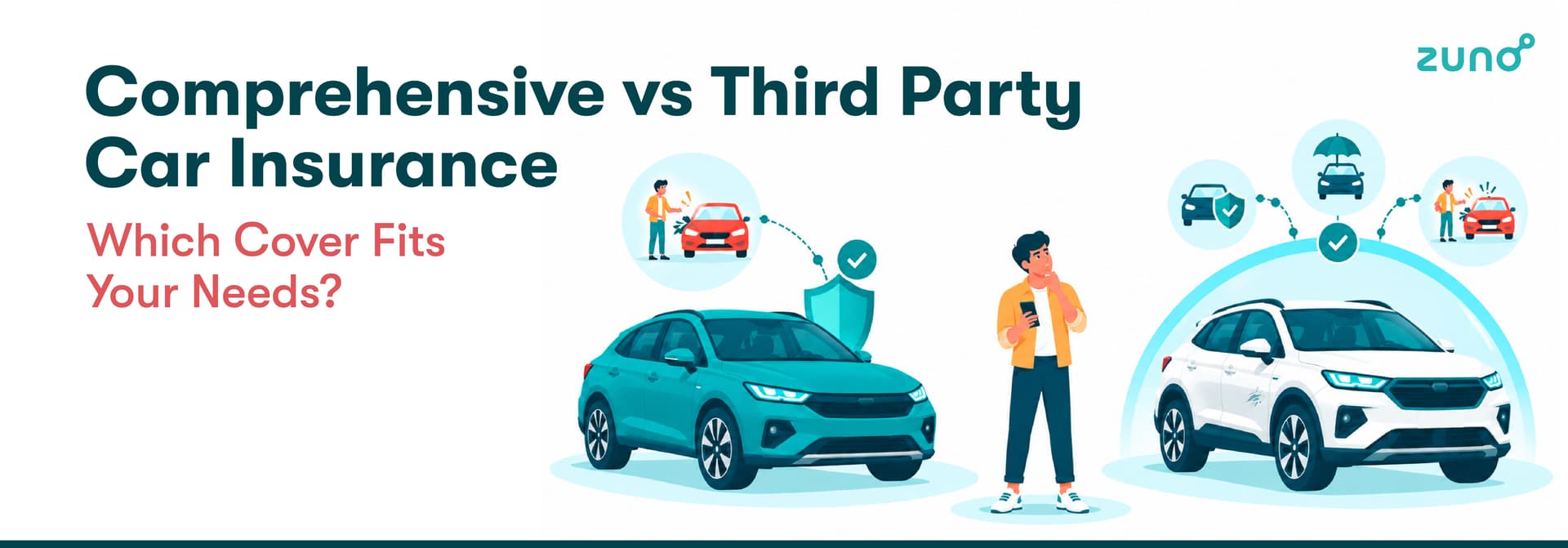
Comprehensive vs third party car insurance: Which cover fits your needs?
Table of contents
|
Choosing the right car insurance involves more than meeting legal requirements. It also means understanding how much financial protection you need if your car is damaged, stolen or involved in an accident. In India, car owners can choose between third party car insurance and a comprehensive car insurance policy, each offering a different level of protection.
While third party insurance is mandatory for vehicles used on public roads, comprehensive insurance offers broader coverage for your own vehicle as well. The right option depends on your car's age, usage, market value, budget and ability to manage unexpected repair expenses.
This guide explains the differences between the two types of four wheeler insurance, their benefits, limitations and the factors to consider before choosing a policy.
What is third party car insurance?
Third party car insurance is a basic motor insurance policy that covers your legal liability if your car causes injury, death or property damage to another person. Under the Motor Vehicles Act, 1988, third party insurance is mandatory for cars used on public roads in India.
For example, if you accidentally collide with another vehicle and damage it, your policy can cover eligible third party liabilities, subject to the terms of the policy and applicable law.
Key benefits of third party car insurance include:
- Legal compliance: It fulfils the mandatory third party insurance requirement for vehicles used on public roads.
- Financial protection against third party claims: It covers eligible compensation arising from bodily injury, death or property damage caused to a third party.
- Lower premiums: It generally costs less than comprehensive insurance because it does not cover damage to your own car.
However, third party car insurance does not pay for damage to your own vehicle following an accident. It also does not cover theft or damage caused by events such as floods, fires or vandalism to your car. These exclusions can leave you with substantial repair or replacement expenses.
What is comprehensive car insurance?
A comprehensive car insurance policy combines third party liability coverage with protection against damage to your own vehicle, subject to the policy's terms, conditions and exclusions.
Depending on the policy, it can cover damage caused by accidents, fire, theft, natural disasters and certain man-made events. It also includes the mandatory third party liability component.
Key benefits of comprehensive car insurance include:
- Own-damage protection: It covers eligible repair costs when your car is damaged in an accident or another insured event.
- Theft protection: It can provide compensation if your insured vehicle is stolen, subject to policy conditions.
- Protection against natural disasters: It generally covers eligible damage caused by events such as floods, storms and earthquakes.
- Optional add-ons: You can enhance coverage with suitable add-ons, such as zero depreciation, roadside assistance and engine protection, where available.
A comprehensive policy usually costs more than third party insurance. However, it can reduce the financial burden of unexpected vehicle repairs or theft. The extent of protection depends on the selected policy, applicable deductibles, exclusions and insured declared value (IDV).
Comprehensive vs third party car insurance: Key differences
Both policies provide third party liability coverage, but their protection for your own vehicle differs considerably.
Feature | Third party car insurance | Comprehensive car insurance |
| Third party injury or death liability | Covered, subject to applicable law | Covered, subject to applicable law |
| Third party property damage | Covered, subject to policy terms and legal limits | Covered, subject to policy terms and legal limits |
| Damage to your own car | Not covered | Covered for insured events |
| Vehicle theft | Not covered | Covered, subject to policy terms |
| Fire and natural disasters | Damage to your own car is not covered | Generally covered for insured events |
| Premium | Generally lower | Generally higher |
| Optional add-ons | Limited options, depending on the insurer | Various own-damage add-ons may be available |
| Best suited for | Owners seeking basic legal liability protection | Owners seeking broader financial protection |
The main distinction is straightforward: third party insurance protects against eligible liabilities towards others, while comprehensive insurance also protects your own vehicle against specified risks.
What does each policy cover?
Understanding coverage details helps prevent confusion when filing a claim.
Third party car insurance coverage
Third party insurance covers eligible legal liabilities arising from an accident involving your car. These may include compensation for injury or death and damage to another person's property, subject to applicable law and policy conditions.
However, if your car hits a wall, suffers accident-related damage or is damaged by a flood, you must generally pay for the repairs yourself. The same applies if the vehicle is stolen.
Comprehensive car insurance coverage
A comprehensive policy generally covers third party liabilities and eligible own-damage expenses. For instance, if your car is damaged in a collision, the insurer may pay for covered repairs after applying the relevant deductibles and policy conditions.
It can also cover damage from insured natural or man-made events and compensate for vehicle theft based on the policy's terms and IDV.
However, comprehensive insurance does not cover every possible expense. Routine wear and tear, mechanical breakdowns unrelated to an insured event and depreciation may be excluded or treated according to policy conditions. Add-ons can address certain gaps, but they may increase the premium.
How much does each type of insurance cost?
The premium is an important consideration when selecting four wheeler insurance. Third party insurance generally has a lower premium because it covers liability towards others rather than damage to your own car.
Third party premium rates for private cars are prescribed by the Insurance Regulatory and Development Authority of India (IRDAI). Comprehensive insurance premiums vary by insurer and can depend on factors such as the vehicle's IDV, age, model, location, claims history and selected add-ons.
Consider these factors when comparing costs:
- Vehicle value: A car with a higher IDV may attract a higher own-damage premium.
- Vehicle age: Older cars may have lower market values, although their repair costs and risk profile still matter.
- Location: Traffic conditions, theft risks and other location-related factors may influence premiums.
- Deductibles: A higher voluntary deductible can reduce the premium but increases the amount you pay towards an eligible claim.
- Add-ons: Optional benefits can increase the premium while providing additional protection.
Comparing quotes for similar coverage is more useful than choosing a policy based on the lowest price alone.
How to choose the right car insurance policy
The best policy depends on your financial circumstances and the risks you want to cover.
Choose third party car insurance if:
- You want to meet the mandatory insurance requirement at a lower cost.
- Your primary concern is liability towards other people and their property.
- You can afford to pay for damage to your own car without relying on insurance.
Choose comprehensive car insurance if:
- You own a new or relatively expensive car.
- You use your car frequently or drive in congested areas.
- You want protection against theft, accidents and specified natural disasters.
- Unexpected repair or replacement costs would significantly affect your finances.
For older cars, consider the vehicle's current market value, likely repair expenses and premium before deciding. A comprehensive policy may still be worthwhile if repairs would be expensive.
Your decision should balance the cost of insurance against the financial risk of going without own-damage protection.
How to buy car insurance online
Buying car insurance online allows you to compare policies, review coverage and select suitable benefits without visiting an insurer's office.
Follow these steps to make an informed choice:
- Enter your vehicle details: Provide the registration number, make, model, variant and other requested information.
- Compare available policies: Review third party and comprehensive options, including premiums and coverage limits.
- Check the exclusions: Read the policy wording to understand what is and is not covered.
- Review add-ons: Consider benefits such as zero depreciation, roadside assistance or engine protection based on your needs.
- Compare deductibles and IDV: Check how these affect the premium and the amount payable in a claim.
- Complete the purchase: Enter the required details, make the payment and save the policy document for future reference.
When purchasing car insurance online, compare policies with similar coverage and deductibles. This makes it easier to identify genuine differences in price and benefits rather than choosing solely on the basis of a headline premium.
Conclusion
The choice between comprehensive and third party car insurance depends on the level of financial protection you need. Third party insurance meets the mandatory legal requirement and covers eligible liabilities towards others. Comprehensive insurance includes this protection while also covering specified damage to your own vehicle.
Before purchasing a policy, consider your car's value, driving habits, budget and ability to handle unexpected expenses. Comparing coverage, exclusions, deductibles and premiums can help you select four wheeler insurance that suits your needs without paying for benefits you do not require.
Frequently asked questions
1. Is comprehensive car insurance mandatory in India?
No. Third party insurance is mandatory for cars used on public roads in India. Comprehensive insurance is optional, although it offers additional protection for your own vehicle.
2. Can I switch from third party to comprehensive car insurance?
Yes. You can generally choose comprehensive insurance when renewing your policy or purchasing a new one. The insurer may inspect the vehicle, depending on the circumstances and applicable underwriting requirements.
3. Does comprehensive insurance cover all types of car damage?
No. It covers specified insured events, subject to policy conditions, exclusions and deductibles. Wear and tear, certain mechanical failures and other excluded situations may not be covered.
4. Is third party car insurance cheaper than comprehensive insurance?
Generally, yes. Third party insurance has a lower premium because it does not cover damage to your own car. Comprehensive insurance costs more but offers broader protection.
Reference: https://www.bajajfinserv.in/insurance/comprehensive-vs-third-party-car-insurance
https://www.policybazaar.com/motor-insurance/car-insurance/comprehensive-vs-third-party-insurance/
All Rights Reserved.
ARN: Zuno/Blog/DM/Comprehensive vs third party car insurance: Which cover fits your needs?/09/26/08
Disclaimer
Source: The content of the blog/article is based on information obtained from publicly accessible and generally recognized sources, including regulatory authorities, official organizational websites, industry associations, research institutions, market intelligence reports, academic publications, and other reputable secondary references. The information has been collated, analysed, and presented solely for informational purposes. Disclaimer: The company offers various products under Motor insurance, Health Insurance, and commercial insurances. For more details on risk factors, terms and conditions, exclusions, and product features, please read the policy wording and sales brochure carefully before concluding sale. Zuno General Insurance Limited, IRDAI Reg. No. 159, CIN: U66000MH2016PLC273758, Regd. Office: 2nd Floor, Tower 3, Wing B, Kohinoor City Mall, Kohinoor City, Kirol Road, Kurla (West) Mumbai City MH 400070. Reach us on TOLL-FREE: 1800 12000 | Landline: 02242312000 (Call charges applicable) www.hizuno.com | support@hizuno.com