







What are the new rules for 15-year-old cars in India?
The world is struggling through a climate crisis right now. At the individual level, we're avoiding single-use plastics and trying to minimise our carbon footprint by carpooling or using public transport. At the country level, India pledged to reach net-zero emissions by 2070 at the 2021 United Nations Climate Change Conference (COP26). The government has outlined a few rules about old cars as part of our endeavour to achieve net-zero emissions. Let's better understand the rules for older vehicles and how they impact you.
Rules from 1st April 2023
In November 2022, India's Ministry of Road Transport & Highways (MoRTH) proposed mandatory non-renewal of all vehicles older than 15 years from 1st April 2023. The rule extends to all vehicles owned by various state governments, corporations and transport department buses. Regional Transport Offices (RTOs) across India will disallow the re-registration of vehicles older than 15 years. Instead, these cars will get de-registered and must then get scrapped. The Minister of Road Transport and Highways, Nitin Gadkari, also announced his intent to set up at least three scrapping facilities in every district to facilitate the scrapping of cars. Personal vehicles will have to undergo a fitness test after 15 years. If it passes the test, the registration will get renewed for five years. If it does not, the vehicle must get scrapped.
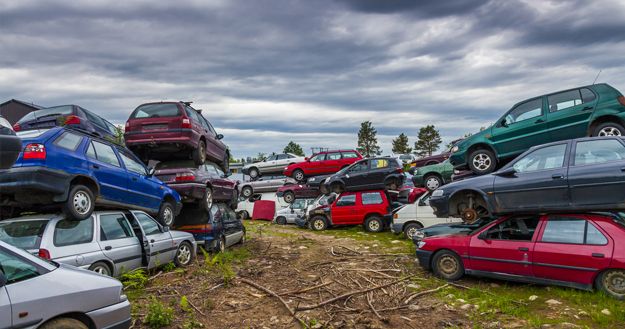
Benefits of scrapping old cars
The vehicle scrappage policy offers the following three advantages:
1. Reduces emissions
The scrapping policy helps get older cars that follow older pollution norms off the road. Worn-down vehicles often have high emissions, which negatively impact the environment.
2. Boosts the auto industry
When scrapping becomes mandatory, people will purchase new vehicles more frequently, boosting the auto industry.
3. Cheaper raw materials for the steel industry
The scrap material from old vehicles becomes a cheaper raw material alternative for the steel industry. Using scrap metal from old cars and bikes helps create a circular economy and boosts the steel industry.
Rules in Delhi
A variation of the proposed regulations has been in effect in Delhi since 2018. The National Green Tribunal (NGT) passed an order in November 2014 stating that petrol vehicles older than 15 years should not be allowed to ply on Delhi roads to help improve air quality and reduce pollution. In April 2015, they stated that diesel vehicles older than ten years should not be allowed to ply on roads either. Since the ban, the Delhi Transport Authority de-registered around 50 lakh vehicles up to January 2023. Despite a few appeals, the NGT refuses to modify the order, and with good reason. Based on a report from the pollution monitoring body, a new diesel car is equivalent to 24 petrol cars and 84 CNG cars, making diesel-powered vehicles incredibly toxic to the environment.

The cost of old cars
Apart from the negative environmental impact, let's better understand how keeping an older car could affect you. Maintaining an older car requires a significant amount of time and money. If you have a vehicle over ten years old, you may struggle to get the right parts or find a garage capable of dealing with your car or bike. Personal vehicles that are older than 15 years also attract a green tax, which the government has recently increased to deter people from using old vehicles with higher emissions. Getting your 15-year-old car or bike re-registered at the RTO instead of scrapped requires significant time and effort. You must complete Form 25 and provide copies of the vehicle's registration certificate, payment proof showing that you cleared all road tax dues, the re-registration fee receipt, and an attested copy of your PAN card. You must also pay the relevant tax, which ranges from 5% to 20%, depending on your vehicle's value and the state's rules.
Scrapping your old vehicle
If you want to send your personal vehicle for scrapping in India, you can follow these steps:
Step 1: De-register your vehicle
Before sending your vehicle for scrapping, you must de-register it with the RTO where it was registered. You should submit the necessary documents, such as the vehicle registration certificate, insurance papers, pollution certificate, and NOC (No Objection Certificate) from the financier (if applicable), to the RTO to complete this process.
Step 2: Contact a registered scrapping agency
On completing the de-registration process, you can contact a registered scrapping agency. The MoRTH website lists registered scrapping agencies authorised to scrap your vehicle.
Step 3: Submit documents to the scrapping agency
The scrapping agency will ask you to submit documents such as the de-registration certificate, pollution under control (PUC) certificate, and the original RC book of the vehicle. You may also need to provide proof of identity and address.
Step 4: Get a quote
The scrapping agency will inspect your vehicle and give you a quote for how much they are willing to pay for it. The agency will issue a scrapping certificate once you agree to the amount.
Step 5: Handover the vehicle
Once you receive the scrapping certificate, you can hand the vehicle over to the scrapping agency. The agency will dismantle it, recycle reusable parts, and sell the scrap metal.
Step 6: Receive payment
Once the vehicle gets scrapped, the agency will pay you the agreed amount.

Now that you understand the new scrapping rules, you can make informed decisions about what to do with your old vehicle. Opting to re-register an old car or bike could lead to significant maintenance costs and taxes. Instead, you can scrap it and purchase a new electric or petrol vehicle to reduce your carbon footprint. Regardless of what you choose, remember to protect your vehicle and your finances by getting comprehensive coverage. Visit the Zuno website today to browse our insurance policies and identify one that meets your needs.
ARN: Zuno/Blog/0423/05
Disclaimer
Source: The content of the blog/article is based on information obtained from publicly accessible and generally recognized sources, including regulatory authorities, official organizational websites, industry associations, research institutions, market intelligence reports, academic publications, and other reputable secondary references. The information has been collated, analysed, and presented solely for informational purposes. Disclaimer: The company offers various products under Motor insurance, Health Insurance, and commercial insurances. For more details on risk factors, terms and conditions, exclusions, and product features, please read the policy wording and sales brochure carefully before concluding sale. Zuno General Insurance Limited, IRDAI Reg. No. 159, CIN: U66000MH2016PLC273758, Regd. Office: 2nd Floor, Tower 3, Wing B, Kohinoor City Mall, Kohinoor City, Kirol Road, Kurla (West) Mumbai City MH 400070. Reach us on TOLL-FREE: 1800 12000 | Landline: 02242312000 (Call charges applicable) www.hizuno.com | support@hizuno.com


